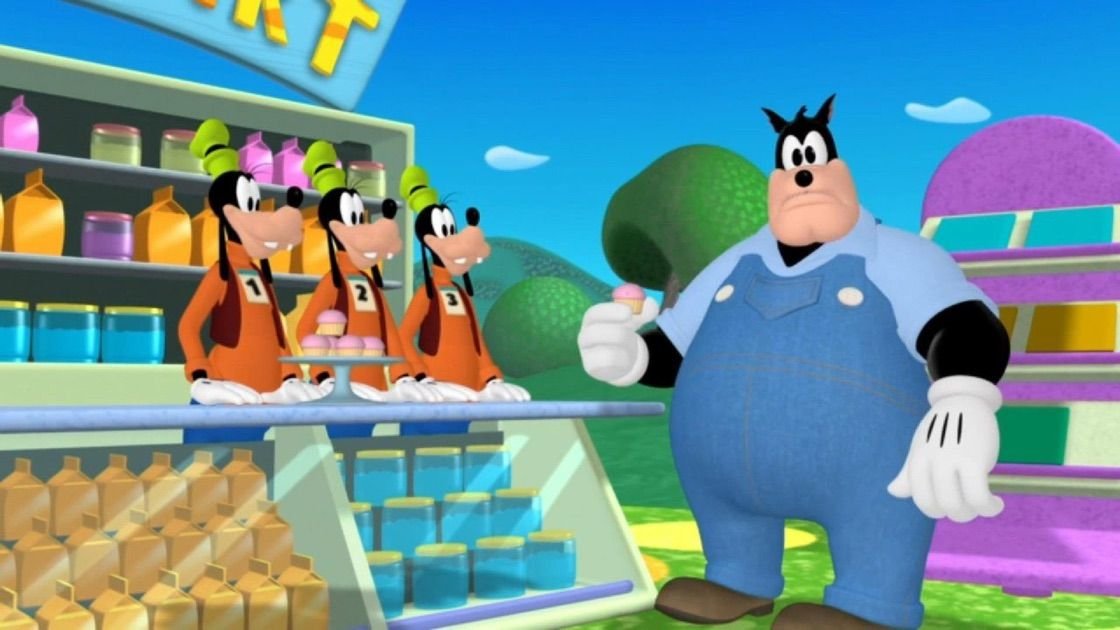
Beyond catchy tunes and the iconic "Hot Dog Dance," Disney's Mickey Mouse Clubhouse offers a treasure trove of learning opportunities for preschoolers. Delving into Educational Themes in Mickey Mouse Clubhouse Season 2 reveals a particularly strong emphasis on fostering essential skills like problem-solving and teamwork, wrapped in engaging narratives that keep young viewers captivated and actively participating.
This isn't just passive entertainment; it's a carefully designed platform where Mickey, Minnie, Goofy, Donald, Daisy, and Pluto lead by example, encouraging children to think critically, collaborate, and navigate social situations. Season 2, with its rich array of 40 episodes, deepens these foundations, building a robust educational experience that resonates long after the credits roll.
At a Glance: Key Educational Takeaways from Mickey Mouse Clubhouse Season 2
- Active Problem-Solving: Encourages children to identify challenges, brainstorm solutions, and use logical reasoning.
- Collaborative Teamwork: Highlights the value of working together, sharing tasks, and supporting friends.
- Early STEM Foundations: Introduces basic concepts in math, science, and engineering through relatable scenarios.
- Social-Emotional Learning: Develops empathy, understanding of emotions, and positive social interactions.
- Creativity & Imagination: Inspires artistic expression, imaginative play, and storytelling.
- Practical Life Skills: Reinforces concepts like responsibility, planning, and adapting to new situations.
Beyond the Hot Dog Dance: Why Mickey Mouse Clubhouse Matters for Young Learners
For many parents, Mickey Mouse Clubhouse is a staple, a show that reliably brings smiles and a few moments of quiet. But its educational value goes far beyond simply keeping kids occupied. The series, particularly evident in its second season, operates on principles of active learning, drawing young viewers into the narrative. Characters frequently pause to ask questions directly to the audience, inviting them to help identify shapes, count objects, or choose the right "Mouseketool" from Toodles. This interactive format transforms passive viewing into an engaging learning experience, preparing children for school by strengthening their cognitive and social abilities.
The underlying structure of each episode in Mickey Mouse Clubhouse Season 2 consistently follows a "problem of the day" format. Mickey and his friends encounter a challenge, and through a series of steps, they use logic, observation, and the help of their trusty Mouseketools to overcome it. This predictable yet varied structure helps children understand cause and effect, sequencing, and the satisfaction of reaching a goal through perseverance.
Cultivating Little Problem-Solvers: The Power of Collaborative Inquiry
One of the most prominent educational themes woven throughout Mickey Mouse Clubhouse Season 2 is the development of problem-solving skills. Children are naturally curious, and the show capitalizes on this by presenting dilemmas that require both individual thought and collective effort to resolve.
Identifying the Puzzle: From Broken Machines to Lost Items
Before a solution can be found, the problem itself must be clearly identified. Season 2 consistently models this crucial first step:
- Investigating Malfunctions: In "Mickey's Handy Helpers," Mickey and the gang must investigate why the Clubhouse's inner workings have stopped. This teaches children to look for the source of an issue rather than just reacting to its symptoms.
- Solving Mysteries: Minnie's deductive skills are put to the test in "Minnie's Mystery" when she needs to find out who took her fresh-baked muffins. This episode introduces basic detective work, examining clues, and considering possibilities. Similarly, "Mickey's Comet" requires the group to locate Professor Von Drake and his telescope before they can observe the celestial event, highlighting the importance of finding necessary resources.
- Conquering Chaos: "Mickey's Silly Problem" presents a truly unique challenge when the Clubhouse's "silly switch" gets stuck, making everyone act comically. The gang's task is not just to laugh, but to figure out how to restore order, demonstrating how to approach an unexpected and disruptive situation systematically.
These scenarios teach children to define the challenge, gather information, and understand what needs to be fixed or found.
Tools and Teamwork: Building Solutions Together
Once a problem is identified, the next step is finding a solution, often with the help of the iconic Mouseketools. But it's not just about magic gadgets; it's about applying them intelligently and, more often than not, collaboratively.
- Constructive Collaboration: In "Goofy the Home Maker," the entire gang works together to build a birdhouse for Baby Red Bird. This is a clear demonstration of teamwork in a practical, hands-on construction project, where different friends contribute their skills to a shared goal.
- Organizing for Success: "Clarabelle's Clubhouse Carnival" showcases organizational problem-solving. When Clarabelle needs corn for her chickens, Mickey creatively organizes a carnival where corn kernels serve as currency for rides and games. This teaches basic economics and event planning in a fun, accessible way.
- Rescuing and Restoring: Episodes like "Pluto to the Rescue" (where Mickey and Pluto help Donald and Goofy who are stuck behind a giant snowman) and "Mickey's Round Up" (where friends work to capture wild numbers and return them to their box) underscore the power of collective action and support in overcoming obstacles. Even Goofy's challenge in "Goofy in Training," as he attempts an obstacle course, is made achievable through the encouragement and help of his friends. These instances reinforce that difficult tasks become manageable when approached as a team.
The Heart of the Clubhouse: Nurturing Social-Emotional Growth
Beyond academic skills, Mickey Mouse Clubhouse Season 2 is a masterclass in social-emotional learning (SEL). The characters, with their distinct personalities, frequently encounter situations that model empathy, friendship, and self-awareness.
Empathy and Friendship: Understanding Others
Relationships are central to the Clubhouse, and many episodes gently guide children toward understanding and responding to the feelings of others.
- Addressing Feelings of Exclusion: In "Donald's Special Delivery," Donald feels upset when his friends receive mail and he doesn't. Mickey's thoughtful response—arranging special-delivery packages from various pals—is a beautiful lesson in empathy and making sure everyone feels included and valued. It teaches children to recognize when a friend is feeling down and to take action to lift their spirits.
- Celebrating Connection: "The Friendship Team" centers around Friendship Day, directly teaching the importance of camaraderie and mutual support. When party hats go missing, Minnie and Daisy work together to retrieve them, demonstrating that even challenges can strengthen bonds.
- Gratitude and Generosity: "Mickey's Thanks a Bunch Day" promotes gratitude and the joy of sharing. Minnie's efforts to grow gigantic fruits and vegetables for the celebration emphasize giving thanks and the abundance of friendship.
These narratives provide concrete examples of how to be a good friend, how to handle minor conflicts, and how to express care and appreciation.
Self-Expression and Identity: Embracing Who You Are
The Clubhouse characters are diverse, each with their quirks and talents. This variety is celebrated, fostering an environment where children learn to appreciate their own unique qualities.
- Exploring Identity: "Goofy's Hat" delves into a surprising aspect of self-identity. Goofy feels unlike himself after losing his hat, prompting Mickey and the gang to help him search for it. This simple premise subtly explores how external items can be tied to our sense of self, and the comfort found in familiar routines or objects.
- Learning New Skills: "Fancy Dancin' Goofy" sees the gang helping Goofy learn gentlemanly ways and fancy dancing for Clarabelle's invitation. It's a sweet example of friends supporting each other in acquiring new skills and stepping outside their comfort zones, reinforcing that it's okay to ask for help when learning something new.
- Creative Confidence: "Mickey's Art Show" encourages creative expression, as Goofy learns to sculpt, paint, and draw to compete. This episode champions the process of artistic creation over the outcome, valuing effort and imagination.
Through these stories, children learn the importance of self-acceptance, the joy of trying new things, and the comfort of having supportive friends who appreciate them for who they are.
Early STEM Adventures: Exploring the World with Mickey and Friends
Science, Technology, Engineering, and Math (STEM) concepts are woven into many Season 2 episodes, making complex ideas accessible and exciting for preschoolers. The Clubhouse provides a safe and fun environment for initial exposure to scientific inquiry and mathematical thinking.
Mathematical Foundations: Counting, Sorting, and Patterns
Numeracy skills are integrated naturally, often as part of solving a larger problem.
- Hands-On Counting: "Mickey's Round Up" is a prime example, where wild numbers escape and run loose, requiring Mickey and friends to capture and count them back into their box. This is a direct, engaging way to practice number recognition and counting.
- Basic Exchange: "Clarabelle's Clubhouse Carnival," while highlighting organization, also introduces a simple form of economics and counting through the exchange of corn kernels for carnival activities.
- Understanding Quantity: In "Goofy Goes Goofy," Goofy accidentally drinks a potion that turns him into six Goofys. The gang's task to keep the multiple Goofys together to revert him to one subtly reinforces counting and the concept of quantity.
These scenarios turn abstract numbers into tangible elements within a playful adventure.
Scientific Discovery: From Comets to Creatures
The Clubhouse gang often embarks on adventures that touch upon various scientific fields, sparking curiosity about the natural world and beyond.
- Astronomy and Observation: "Mickey's Comet" focuses on the excitement of viewing a celestial event. The need to find Professor Von Drake and his telescope emphasizes the tools and methods used in scientific observation. Similarly, "Space Captain Donald" takes the gang to the moon to retrieve Pluto's bouncy ball, offering a whimsical introduction to space travel. "Mickey's Message from Mars" continues this theme of space exploration and discovering new environments.
- Ecology and Nature: "Mickey and Minnie's Jungle Safari" involves the search for a rare flower, introducing concepts of botany and diverse ecosystems. "Minnie's Bee Story" teaches about bee habitats and the effects of natural phenomena like wind, while "Donald's Ducks" highlights animal migration, providing insights into the lives of different creatures. "Goofy's Coconutty Monkey" further explores jungle ecology and the search for specific resources.
- Weather and Phenomena: "Minnie's Rainbow" touches upon natural phenomena, even if it leads to a whimsical encounter with a leprechaun, it can still prompt discussions about how rainbows form.
By presenting these concepts through adventure, Mickey Mouse Clubhouse encourages children to ask questions about how the world works.
Engineering and Innovation: Building and Fixing
The act of constructing, assembling, or repairing is a recurring mini-theme, introducing foundational engineering principles.
- Practical Construction: "Goofy the Home Maker" (building a birdhouse) is a clear example of applying design and construction skills.
- Investigating Mechanics: "Mickey's Handy Helpers" focuses on diagnosing and fixing a problem within the Clubhouse's inner workings, a simplified introduction to mechanical troubleshooting.
- Assembly and Transport: "Choo Choo Express" requires the gang to assemble a train to deliver snow, showcasing the steps involved in constructing a functional vehicle and understanding its purpose. This episode even features a musical performance by They Might Be Giants, making the learning memorable.
These episodes foster an appreciation for how things are built and how systems work.
Creativity and Imagination: Sparking Inner Artists
The Clubhouse also understands the vital role of creative expression and imaginative play in child development, encouraging children to think beyond the obvious and embrace their inner artist.
- Artistic Exploration: "Mickey's Art Show" provides a direct avenue for this, as Goofy learns and practices sculpting, painting, and drawing. It showcases various art forms and the joy of creation.
- Musical Performance: "Clarabelle's Clubhouse Mooo-sical" is a delightful exploration of staging a show, featuring nursery rhymes and the challenges of performance (like chickens losing their voices from too much practice!). This teaches about rhythm, song, and dramatic arts.
- Imaginative Storytelling: One of the most enchanting examples is "Mickey's Adventures in Wonderland," where the search for a mechanical cuckoo bird transforms into an "Alice in Wonderland"-like adventure. This episode beautifully illustrates the power of imagination and how stories can come to life, encouraging children to create their own fantastical worlds.
These creative outlets are not just for fun; they help children develop narrative skills, emotional expression, and unique perspectives.
Navigating Tricky Situations: Life Lessons in the Clubhouse
Life isn't always smooth sailing, even in the Clubhouse. Season 2 episodes often present situations that teach children how to manage unexpected events, take responsibility, and adapt.
Managing Emotions and Unexpected Events
- Coping with the Unpredictable: "Pluto's Bubble Bath" gets hilariously out of hand, leading to Mickey and Pluto floating away in giant bubbles. This episode, while comedic, teaches about dealing with unexpected consequences and finding solutions when things don't go as planned.
- Dealing with Disruption: "Mickey's Silly Problem" (mentioned earlier for problem-solving) also fits here, as the characters must cope with and resolve a situation where everyone is acting unusually, requiring patience and adaptability.
These scenarios gently introduce the concept that life can be unpredictable and that maintaining composure while seeking solutions is key.
Responsibility and Caretaking
- Taking Charge: "Mickey's Big Job" sees Mickey and the gang taking care of Willie the Giant's farm while he's away. This episode is a clear lesson in responsibility, caring for animals, and managing a household (or farm) efficiently.
- Caring for Pets: "Daisy's Pet Project" involves the search for a pet for Daisy so she can participate in a pet parade. This encourages discussions around what it means to care for an animal and the commitment involved in pet ownership.
These episodes reinforce the importance of being reliable and looking after others, whether they're farm animals or potential pets.
A Parent's Playbook: Maximizing Learning from Season 2
As a parent or caregiver, you can amplify the educational impact of Mickey Mouse Clubhouse Season 2 by engaging with your child during and after viewing. Here are some actionable tips:
- Watch Together Actively: Don't just let the show play in the background. Sit with your child and participate in the show's interactive moments. Ask, "What Mouseketool do you think we need?" or "What's the problem here?"
- Reinforce Concepts: After an episode, extend the learning. If they watched "Mickey's Round Up," practice counting objects around the house. If they saw "Goofy the Home Maker," build something simple together with blocks or craft supplies.
- Discuss Emotions and Social Dynamics: After an episode like "Donald's Special Delivery," ask, "How do you think Donald felt?" or "What did Mickey do to help Donald feel better?" This helps children articulate emotions and understand social cues.
- Encourage Creative Play: If "Mickey's Art Show" inspires them, set up an art station. If "Mickey's Adventures in Wonderland" sparks their imagination, encourage them to create their own "wonderland" in the living room with pillows and blankets.
- Connect to Real Life: Point out how the Clubhouse lessons apply to everyday situations. "Remember when Mickey and his friends worked together to build the birdhouse? We can work together to clean up our toys!"
- Embrace "Mistakes": The characters often face setbacks. Discuss how they try again or change their approach. This teaches resilience and that it's okay not to get things right the first time.
By actively participating and extending the themes into everyday life, you transform screen time into a powerful tool for holistic development.
The Enduring Appeal of Clubhouse Learning
Mickey Mouse Clubhouse Season 2 is more than just a collection of animated adventures; it's a meticulously crafted educational experience. It skillfully marries entertainment with developmental goals, ensuring that children are not only amused but also actively learning crucial life skills. The consistent focus on problem-solving, teamwork, early STEM principles, social-emotional intelligence, and creative expression makes it a standout choice for preschoolers.
In a world filled with countless entertainment options, the Clubhouse stands as a testament to the power of thoughtful children's programming. It empowers young minds to engage with the world around them, preparing them for future academic and social successes, one "Oh, Toodles!" at a time. The lessons learned in Season 2 continue to resonate, proving that even a simple cartoon can lay the groundwork for a lifetime of curiosity and collaboration.